
How to Improve Hand-Eye Coordination: 9 Drills and a 4-Week Plan
Posted on27 October 2026
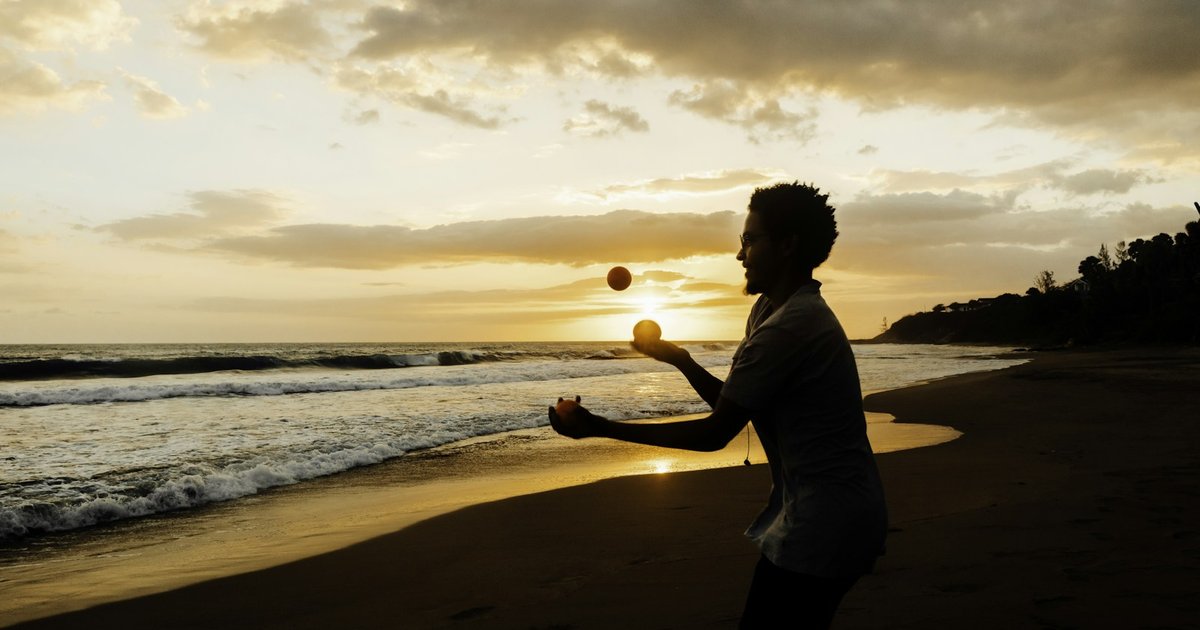
Photo by Rock Staar on Unsplash
Short answer: You improve hand-eye coordination by practising tasks where your eyes guide your hands. Catching, juggling, racquet games and tracing all count. Do 10 to 15 minutes a day, make each drill a little harder once it feels easy, and sleep well. Most people notice a difference within two to four weeks.

What hand-eye coordination is, and why it slips
Hand-eye coordination is your brain using what your eyes see to steer your hands. Catching a set of keys, pouring coffee into a cup, typing, threading a needle and returning a tennis serve all depend on it.
It is a skill, not a fixed trait. That is good news, because skills respond to practice. It also explains why it fades: if your days are spent on a sofa and a keyboard, your eyes and hands rarely have to work together at speed.
A few other things make it worse for a while:
- Poor sleep. Tired brains react later and miss more.
- Your eyes. Blurry vision or a weak eye makes it hard to judge distance. If you have not had an eye test in two years, book one.
- Stress, caffeine and fatigue. Shaky hands and rushed movements cost accuracy.
- Age. Reaction speed tends to drop slowly as we get older. Practice still helps later in life.
Watch on YouTube: Voltline buzz wire arcade — full gameplay
Test yourself first: two 2-minute checks
Before you start, take a baseline. Then you can see real progress instead of guessing.
1. The ruler drop. Ask someone to hold a 30 cm (12 inch) ruler from the top end. Hold your thumb and finger open at the zero mark without touching it. They drop it without warning; you catch it as fast as you can. Read the number where you caught it. Do it five times and take the middle score.
| Caught at | Your reaction time | What it means |
|---|---|---|
| 10 cm (4 in) or less | about 0.14 s or faster | quick |
| 15 cm (6 in) | about 0.17 s | good |
| 20 cm (8 in) | about 0.20 s | typical |
| 25 cm (10 in) or more | about 0.23 s or slower | room to improve; check sleep and eyes |
The times come from simple physics: a falling ruler covers distance at a known rate, so the catch point tells you how long you took.
2. The wall catch. Stand two metres (about six feet) from a wall. Throw a tennis ball with your right hand and catch it with your left, then switch. Count clean catches in 60 seconds. Write the number down.
Redo both checks at the end of each week.
9 drills that build hand-eye coordination
Start with three or four drills you enjoy. You do not need all nine.
Drill 1: Wall throw and catch
The wall catch from the test doubles as a simple everyday drill. Start with two hands and a big ball. Move to one hand, then the opposite hand, then a smaller ball. Standing on one foot makes it harder again.
Drill 2: Juggling
Begin with one ball, tossing it in an arc from hand to hand at eye height. Add a second ball once ten tosses in a row feel easy. Three-ball juggling usually takes a few weeks of short sessions. In a study published in Nature, adults who learned to juggle over three months showed growth in brain areas that process moving objects. Those changes faded after they stopped, so keep a little practice going.
Drill 3: Balloon taps
Keep a balloon in the air by tapping it with alternating hands. It moves slowly, so it suits young children, older adults and anyone coming back after an injury. Make it harder by using only your weaker hand, or a ruler instead of your hand.
Drill 4: Racquet games
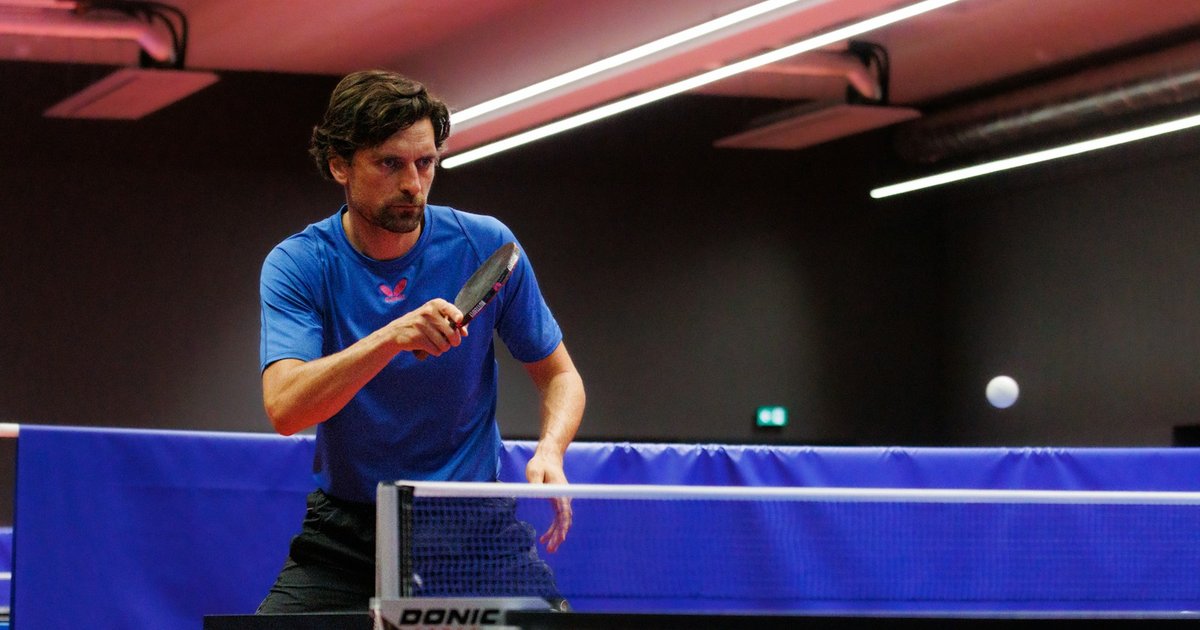
Table tennis, badminton, squash and tennis make your eyes track a fast object and your hands meet it at the right moment. Table tennis is the easiest to fit into a week. Even rallying with a friend for 15 minutes counts.
Drill 5: Paddle bounces
No partner? Bounce a ball on a racquet or paddle face and count how many in a row you can do. Then try alternating the two sides of the paddle. This trains small, precise adjustments.
Drill 6: Near-far focus switching
Hold your thumb about 30 cm in front of your face and look at it. Then look at something across the room, at least three metres away. Switch every two seconds for a minute. This helps your eyes refocus fast, which matters when a ball comes toward you.
Drill 7: Tracing and mazes
Trace a printed maze or a wavy line with a pen without touching the edges. Then do it faster. It is the slow, precise side of coordination: the eye leads, the hand follows. Drawing, painting and building models train the same thing.
Drill 8: A steady-hand tracking game
The fairground buzz wire game, where you move a metal loop along a bent wire without touching it, is the same idea as tracing, with a buzzer for every slip. You can play the same game on a phone in Voltline. You drag a ring along a live wire, and a touch sends you back. Across 48 stages the ring gets smaller and the safe margin tighter, so the drill gets harder as you do. Zero buzzes earns three stars, so you get a clear score for accuracy every time. It is a game, not a medical or training tool, but it is a handy five minutes when you have no ball and no wall.
Drill 9: Sorting small objects
Tip a handful of coins, beads or dried beans onto a table. Sort them into cups by size or colour against a timer. Use your weaker hand for half the rounds. This builds the fine control you use for buttons, cables and needles.
Do video games improve hand-eye coordination?
Some do. In a 2016 study in Psychological Science, adults who did not play games played a fast driving or shooting game for 5 or 10 hours. Afterwards they were better at keeping a steady lane in a driving task. A group that played a slow, non-action game did not improve.
Two things follow. Games that make you react to movement and correct small errors in real time help most. And games are a supplement: they train your thumbs and eyes, while catching and racquet sports train your whole arm and body. Mix both.
A 4-week plan: 10 to 15 minutes a day
Short daily sessions beat one long weekend session. Here is a plan that needs one tennis ball, a balloon and a wall.
| Week | Daily drills (about 12 minutes) | Make it harder when… |
|---|---|---|
| 1 | Wall catch, two hands (4 min) · balloon taps (3 min) · focus switching (1 min) · tracing (4 min) | you get 30 clean catches in a minute |
| 2 | Wall catch, one hand (4 min) · one-ball juggling (4 min) · sorting with your weaker hand (4 min) | ten tosses in a row land in the other hand |
| 3 | Wall catch, opposite hand (4 min) · two-ball juggling (4 min) · paddle bounces or a tracking game (4 min) | you can bounce 20 in a row |
| 4 | Wall catch on one foot (4 min) · try three balls (4 min) · racquet game with a friend, once or twice this week | — repeat the two tests and compare |
What "good" looks like after four weeks: a ruler catch a few centimetres higher than your first score, and 10 to 20 more wall catches per minute. Smaller gains are still gains.
Habits that make the practice stick
- Sleep on it. In a Harvard study published in Neuron00746-8), people were about 20% faster at a practised finger-tapping task after a night of sleep, with no loss of accuracy. The same hours awake gave no clear benefit. Practise in the day, then sleep well.
- Stop before you are sloppy. Practice while tired teaches tired movements. Ten focused minutes beat thirty careless ones.
- Train the weaker hand. It has the most room to improve, and the stronger side benefits from the balance.
- Keep it a little too hard. If you never drop the ball, the drill is too easy. Aim to succeed about eight times in ten.
- Get your eyes checked. No amount of practice fixes blurry vision.
If clumsiness comes on suddenly, or with double vision, numbness or weakness, see a doctor rather than training through it.
Who built it
Teamz Lab is a product studio registered in the UK and run by engineers from Bangladesh. We design and build mobile apps and web products for companies in Bangladesh, the UK and the Nordics, and we ship apps of our own, Voltline among them, so that what we learn reaches client work.

Drag the ring along a live wire without touching it. 48 stages across six neon worlds, three stars for a clean run, and a ghost of your own record run to race. No in-app purchases, and it plays offline after the first launch.
Google PlayApp StoreSee how it plays →Tell us what you are planning and how far along it is.
Talk to Teamz LabFAQ
How long does it take to improve hand-eye coordination? Most people see a change in their catch count or ruler score within two to four weeks of 10 to 15 minutes a day. Harder skills, like three-ball juggling, can take one to three months. Keep practising a little after that, or the gains slowly fade.
Can adults improve hand-eye coordination? Yes. Adults learn coordination skills at every age, though progress can be slower than in children. The juggling study above was done with adults. Start with slow drills like balloon taps and build up.
What sports improve hand-eye coordination the most? Sports where you hit or catch a moving ball: table tennis, badminton, tennis, squash, baseball, cricket and volleyball. Boxing pad work and martial arts help too. Pick the one you will actually play every week.
What causes poor hand-eye coordination? Often it is simply lack of practice, poor sleep or uncorrected eyesight. Some people have a lifelong condition such as developmental coordination disorder (dyspraxia). Sudden clumsiness can be a sign of a medical problem, so see a doctor if it appears out of nowhere.
How can I improve hand-eye coordination at home without equipment? Use a balloon or a pair of rolled-up socks for taps and catches, practise near-far focus switching, trace mazes on paper, and sort coins against a timer. A steady-hand game on your phone adds a short drill when you are away from home.